
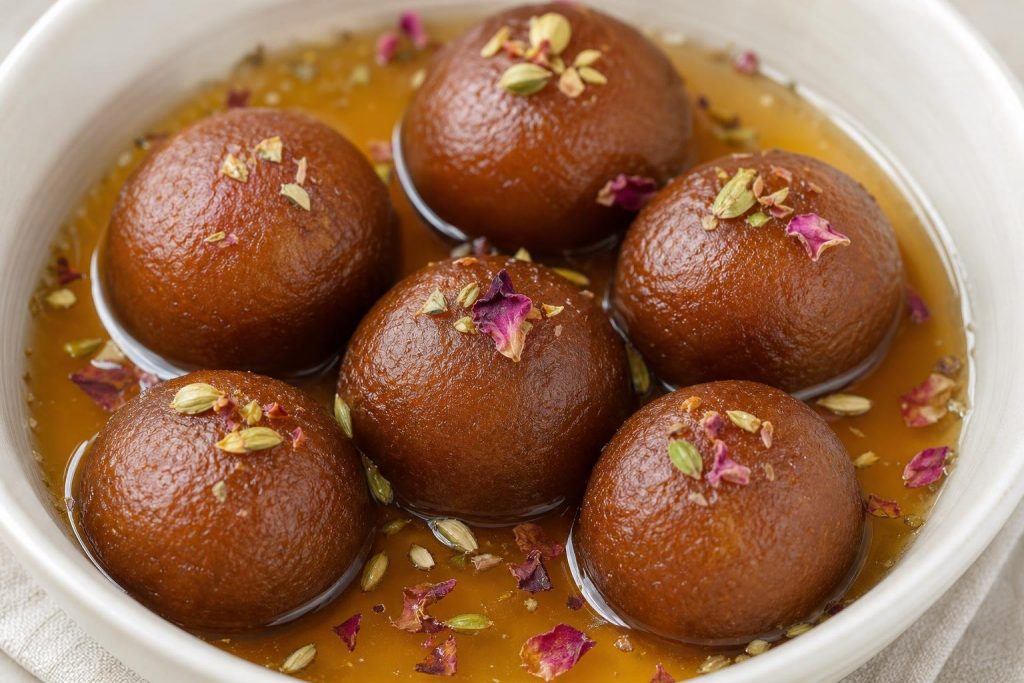
Indian Gulab Jamun with Cardamom Syrup
Ingredients
- 1 cup
How to measure
- ¼ cup
How to measure
- 2 tablespoons
melted
How to measure
- ¼ cup · ≈ 60 ml
How to measure
- ¼ teaspoon
How to measure
- 3 cups · ≈ 720 ml
for frying
How to measure
- 2 cups
How to measure
- 2 cups · ≈ 480 ml
How to measure
- 6 pods
lightly crushed
How to measure
- 1 teaspoon · ≈ 5 ml
Optional
How to measure
Ingredient quantities adjust from the original 4 servings. Instructions and cooking times stay unchanged.
Measurement guide
tbsp = tablespoon · tsp = teaspoon. Use measuring spoons, not table cutlery. Metric equivalents are estimates. ¾ = three quarters; ½ = one half; ¼ = one quarter.
Directions
Prepare the Sugar Syrup
In a medium saucepan, combine granulated sugar, water, and lightly crushed green cardamom pods. Bring the mixture to a gentle boil over medium heat, stirring occasionally until all sugar granules dissolve completely to create a clear syrup. Reduce heat to low and let it simmer for about 10 minutes to allow the cardamom's warm, floral flavors to infuse fully. Remove the pan from heat and, if using, stir in rose water for an additional subtle fragrant note. Keep the sugar syrup warm while you prepare the dough, as soaking the fried dumplings in warm syrup ensures optimal absorption and flavor development.
Make the Dough for Gulab Jamun
In a large mixing bowl, blend together the milk powder, all-purpose flour, baking soda, and melted ghee (or butter) until well combined. The melted ghee helps create a moist, tender dough and adds richness essential for softness. Gradually add whole milk in small increments, gently folding the mixture without overworking until a smooth, soft dough forms. The dough should be pliable and easily shaped but not sticky to the touch. Allow the dough to rest for 10 minutes; this resting period hydrates the ingredients evenly and lends elasticity needed during shaping and frying.
Shape the Dough Balls
Divide the rested dough into 12 equal portions to ensure uniform cooking. Take each portion and roll it gently between your clean palms until you form a smooth, shiny ball without cracks—cracks can cause the gulab jamun to break apart during frying. Handle the dough with care to maintain airiness and prevent it from becoming dense. Keep the shaped balls aside on a tray lightly dusted with flour or parchment paper to avoid sticking, ready for frying.
Heat the Frying Oil
In a deep frying pan or heavy-bottomed pot, pour ghee or vegetable oil and heat it over medium heat, aiming for a temperature near 320°F (160°C). It is important the oil is hot enough to cook the gulab jamun slowly but not so hot as to brown the outside too quickly while leaving the inside uncooked. Test the oil by dropping a small piece of dough; it should slowly rise to the surface without turning dark immediately. Maintain consistent heat during frying for even cooking.
Fry the Gulab Jamun
Carefully slide the dough balls into the warm oil in small batches to avoid overcrowding, which lowers the oil temperature and makes the gulab jamun greasy. Fry them gently on low to medium heat, stirring constantly and gently to ensure all sides brown evenly to a uniform golden color. This slow frying process takes approximately 6 to 8 minutes per batch and helps the dumplings cook through with a crisp exterior and tender interior. Use a slotted spoon to remove the gulab jamun and set them on paper towels to drain excess oil.
Soak in Warm Cardamom Syrup
Immerse the fried gulab jamun balls into the warm cardamom-infused sugar syrup immediately after draining. It is crucial the syrup is warm to allow the dumplings to soak up the sweetness and moisture thoroughly. Let them soak for at least 30 minutes, during which they swell slightly and soften further, becoming juicy and syrupy inside. Serve the gulab jamun warm or at room temperature for a popular traditional dessert that offers a perfect blend of soft texture and rich, fragrant sweetness.
Indian gulab jamun is a beloved dessert featuring soft, fried milk-based dough balls that melt in your mouth, soaked in fragrant cardamom syrup. This traditional sweet brings a perfect balance of rich, creamy texture with a delicate aroma from the spices. Crafted carefully, this recipe offers a classic Indian gulab jamun experience that's approachable for home cooks seeking an easy yet authentic sweet treat.
The key to perfect gulab jamun lies in a tender dough made from milk powder and a lightly spiced sugar syrup infused with crushed cardamom pods. The detailed steps, from blending the dough to frying the dumplings evenly and soaking them slowly, allow the syrup to infuse every bite with warmth and sweetness that defines this iconic Indian dessert.
Ideal for celebrations or an indulgent after-meal delight, this Indian gulab jamun recipe uses simple ingredients like milk powder, flour, ghee, and cardamom. You'll create an impressive traditional sweet that is irresistibly soft, delectably syrupy, and deeply satisfying, transporting you to the rich heritage of Indian sweets.
How to Make Indian Gulab Jamun
- Prepare the Sugar Syrup: In a medium saucepan, combine granulated sugar, water, and lightly crushed green cardamom pods. Bring the mixture to a gentle boil over medium heat, stirring occasionally until all sugar granules dissolve completely to create a clear syrup.
- Make the Dough for Gulab Jamun: In a large mixing bowl, blend together the milk powder, all-purpose flour, baking soda, and melted ghee (or butter) until well combined. The melted ghee helps create a moist, tender dough and adds richness essential for softness.
- Shape the Dough Balls: Divide the rested dough into 12 equal portions to ensure uniform cooking. Take each portion and roll it gently between your clean palms until you form a smooth, shiny ball without cracks—cracks can cause the gulab jamun to break apart during frying.
- Heat the Frying Oil: In a deep frying pan or heavy-bottomed pot, pour ghee or vegetable oil and heat it over medium heat, aiming for a temperature near 320°F (160°C). It is important the oil is hot enough to cook the gulab jamun slowly but not so hot as to brown the outside too quickly while leaving the inside uncooked.
- Fry the Gulab Jamun: Carefully slide the dough balls into the warm oil in small batches to avoid overcrowding, which lowers the oil temperature and makes the gulab jamun greasy. Fry them gently on low to medium heat, stirring constantly and gently to ensure all sides brown evenly to a uniform golden color.
- Soak in Warm Cardamom Syrup: Immerse the fried gulab jamun balls into the warm cardamom-infused sugar syrup immediately after draining. It is crucial the syrup is warm to allow the dumplings to soak up the sweetness and moisture thoroughly.
Equipment
- Mixing bowl
- Deep frying pan
- Slotted spoon
- Saucepan
- Measuring cups and spoons
- Wire rack or paper towels
Metric measurements
For the original 4 servings. This reference table stays fixed when you change the portions above.
| Ingredient | US amount | Metric equivalent |
|---|---|---|
| milk powder | 1 cup | 100 grams |
| all-purpose flour | ¼ cup | 30 grams |
| ghee or unsalted buttermelted | 2 tablespoons | 30 grams |
| whole milk | ¼ cup | 60 ml |
| baking soda | ¼ teaspoon | 1 gram |
| ghee or vegetable oilfor frying | 3 cups | 720 ml |
| granulated sugar | 2 cups | 400 grams |
| water | 2 cups | 480 ml |
| green cardamom podslightly crushed | 6 pods | 6 pods |
| rose waterOptional | 1 teaspoon | 5 ml |
Cooking tips
- Use milk powder rather than fresh milk for better texture and convenience.
- Maintain oil temperature around 320°F (160°C) to cook gulab jamun evenly without burning outside.
- Gently roll dough balls without cracks to prevent them from breaking during frying.
- Soaking gulab jamun in syrup while warm helps them absorb more sweetness and stay soft.
Substitutions
- Replace ghee with melted unsalted butter for a mild flavor, though ghee adds a richer aroma.
- Use honey instead of sugar syrup for a natural sweetener; warm gently to avoid caramelization.
Storage and reheating
To store leftover indian gulab jamun, place them in an airtight container along with enough sugar syrup to keep them moist and prevent drying out. Refrigerate the container for up to 3 days to maintain freshness. Before serving again, gently reheat the gulab jamun either in the microwave or by warming the syrup on the stove to bring back the soft texture and sweet aroma.
Avoid leaving the soaked gulab jamun at room temperature for long periods to prevent spoilage due to moisture and sugar content.
Allergen notes
Potential allergens include milk, wheat (gluten). Check all labels and substitutions; this is not an exhaustive allergen assessment.