
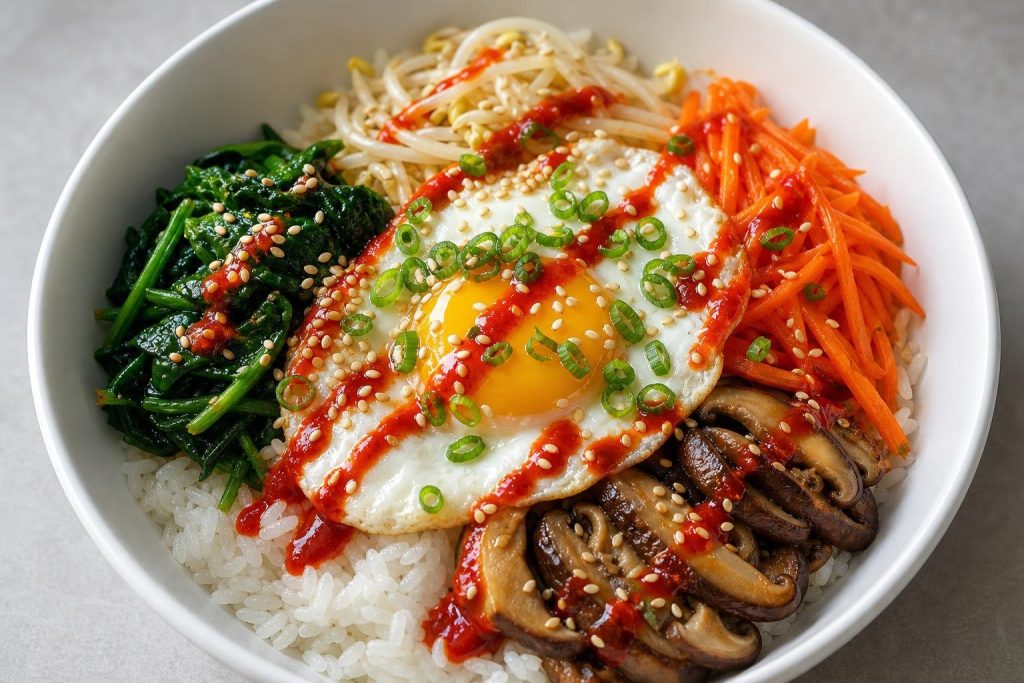
Korean Bibimbap with Spicy Gochujang Sauce
Ingredients
- 2 cups
uncooked
How to measure
- 1 cup
trimmed and rinsed
How to measure
- 4 cups
washed and tough stems removed
How to measure
- 1 cup
julienned
How to measure
- 1 cup
sliced · Optional
How to measure
- 3 tablespoons · ≈ 45 ml
How to measure
- 3 cloves
minced
How to measure
- 3 tablespoons · ≈ 45 ml
How to measure
- 2 tablespoons · ≈ 30 ml
How to measure
- 4 tablespoons
How to measure
- 1 tablespoon
How to measure
- 1 tablespoon · ≈ 15 ml
How to measure
- 4
fried sunny-side up
How to measure
- 1 tablespoon
Optional
How to measure
- 2
thinly sliced · Optional
How to measure
Ingredient quantities adjust from the original 4 servings. Instructions and cooking times stay unchanged.
Measurement guide
tbsp = tablespoon · tsp = teaspoon. Use measuring spoons, not table cutlery. Metric equivalents are estimates. ¾ = three quarters; ½ = one half; ¼ = one quarter.
Directions
Cook the rice
Rinse the uncooked short-grain white rice under cold water until the water runs clear. Place the rinsed rice in a medium pot and add 2 1/2 cups (600 ml) of water. Cover and bring to a boil over medium-high heat. Once boiling, reduce heat to low and simmer, covered, for about 15 minutes until water is absorbed and rice is tender. Remove from heat and let stand covered for 5 minutes.
Prepare and sauté vegetables
While rice cooks, heat 1 tablespoon vegetable oil in a large skillet over medium heat. Add minced garlic and sauté until fragrant, about 30 seconds. Add bean sprouts and sauté for 2-3 minutes until tender-crisp but still bright. Remove and set aside. Next, add another tablespoon vegetable oil, sauté spinach with a pinch of salt until wilted, about 2-3 minutes, then remove. Repeat with carrots and shiitake mushrooms (if using), cooking each separately for 2-3 minutes until tender. Season each vegetable lightly with 1/2 tablespoon soy sauce after cooking.
Make the spicy gochujang sauce
In a small bowl, mix together gochujang, sugar, rice vinegar, 1 tablespoon soy sauce, and 1 tablespoon sesame oil until smooth. Adjust seasoning by adding more sugar or soy sauce to balance sweetness and saltiness if desired.
Fry the eggs
In the same skillet, add a little vegetable oil if needed and fry eggs sunny-side up over medium heat until the whites are set but the yolks remain runny, about 3-4 minutes. Cook longer if you prefer firmer yolks.
Assemble the bibimbap bowls
Divide the cooked rice evenly among four bowls. Arrange the sautéed bean sprouts, spinach, carrots, and mushrooms in sections on top of the rice. Place one fried egg in the center of each bowl. Drizzle the spicy gochujang sauce over the top. Garnish with toasted sesame seeds and sliced scallions if using. Mix everything together thoroughly just before eating.
Korean bibimbap is a colorful and flavorful mixed rice bowl that combines steamed rice with sautéed vegetables, a fried egg, and a spicy chile paste called gochujang. This dish offers a delightful mix of textures and vibrant tastes, making it a wholesome meal for any day of the week.
Unlike one-pot or baked meals, bibimbap is served assembly-style, highlighting the contrast between fresh and cooked ingredients. Each bite combines the soft rice, crisp vegetables, and rich umami sauce, making korean bibimbap a satisfying and fun dinner option.
Preparing this recipe is straightforward and accessible to home cooks of all levels, requiring simple sautéing techniques and easy assembly. It’s great for those who want a delicious, colorful, and mildly spicy meal that can be customized with favorite vegetables or proteins.
How to Make Korean Bibimbap
- Cook the rice: Rinse the uncooked short-grain white rice under cold water until the water runs clear. Place the rinsed rice in a medium pot and add 2 1/2 cups (600 ml) of water.
- Prepare and sauté vegetables: While rice cooks, heat 1 tablespoon vegetable oil in a large skillet over medium heat. Add minced garlic and sauté until fragrant, about 30 seconds.
- Make the spicy gochujang sauce: In a small bowl, mix together gochujang, sugar, rice vinegar, 1 tablespoon soy sauce, and 1 tablespoon sesame oil until smooth. Adjust seasoning by adding more sugar or soy sauce to balance sweetness and saltiness if desired.
- Fry the eggs: In the same skillet, add a little vegetable oil if needed and fry eggs sunny-side up over medium heat until the whites are set but the yolks remain runny, about 3-4 minutes. Cook longer if you prefer firmer yolks.
- Assemble the bibimbap bowls: Divide the cooked rice evenly among four bowls. Arrange the sautéed bean sprouts, spinach, carrots, and mushrooms in sections on top of the rice.
Equipment
- medium pot
- large skillet
- small bowl
- spatula
- measuring spoons
Metric measurements
For the original 4 servings. This reference table stays fixed when you change the portions above.
| Ingredient | US amount | Metric equivalent |
|---|---|---|
| short-grain white riceuncooked | 2 cups | 370 grams |
| bean sproutstrimmed and rinsed | 1 cup | 100 grams |
| fresh spinachwashed and tough stems removed | 4 cups | 120 grams |
| carrotjulienned | 1 cup | 130 grams |
| shiitake mushroomssliced · Optional | 1 cup | 70 grams |
| vegetable oil | 3 tablespoons | 45 ml |
| garlic clovesminced | 3 cloves | 9 grams |
| soy sauce | 3 tablespoons | 45 ml |
| sesame oil | 2 tablespoons | 30 ml |
| gochujang (Korean chili paste) | 4 tablespoons | 60 grams |
| sugar | 1 tablespoon | 12 grams |
| rice vinegar | 1 tablespoon | 15 ml |
| fried eggsfried sunny-side up | 4 | 4 |
| toasted sesame seedsOptional | 1 tablespoon | 9 grams |
| scallionsthinly sliced · Optional | 2 | 30 grams |
Cooking tips
- Use short-grain rice for the best texture – it’s stickier and holds the bowl together well.
- Cook and season each vegetable separately to preserve their unique flavors and textures.
- If you prefer less heat, reduce the amount of gochujang or mix it with a little mild chili paste or ketchup.
- For added protein, consider adding cooked beef, tofu, or mushrooms in place of or in addition to the vegetables.
Substitutions
- You can substitute baby spinach with kale or Swiss chard, but cook until tender to reduce toughness.
- Instead of shiitake mushrooms, use button or cremini mushrooms; the flavor will be milder but still delicious.
Storage and reheating
Store any leftover components separately in airtight containers in the refrigerator for up to 2 days. Reheat vegetables and rice gently in a skillet or microwave before assembling again. Avoid reheating fried eggs as they can become rubbery, so cook fresh eggs when serving leftovers.
Allergen notes
Potential allergens include egg, soy. Check all labels and substitutions; this is not an exhaustive allergen assessment.