
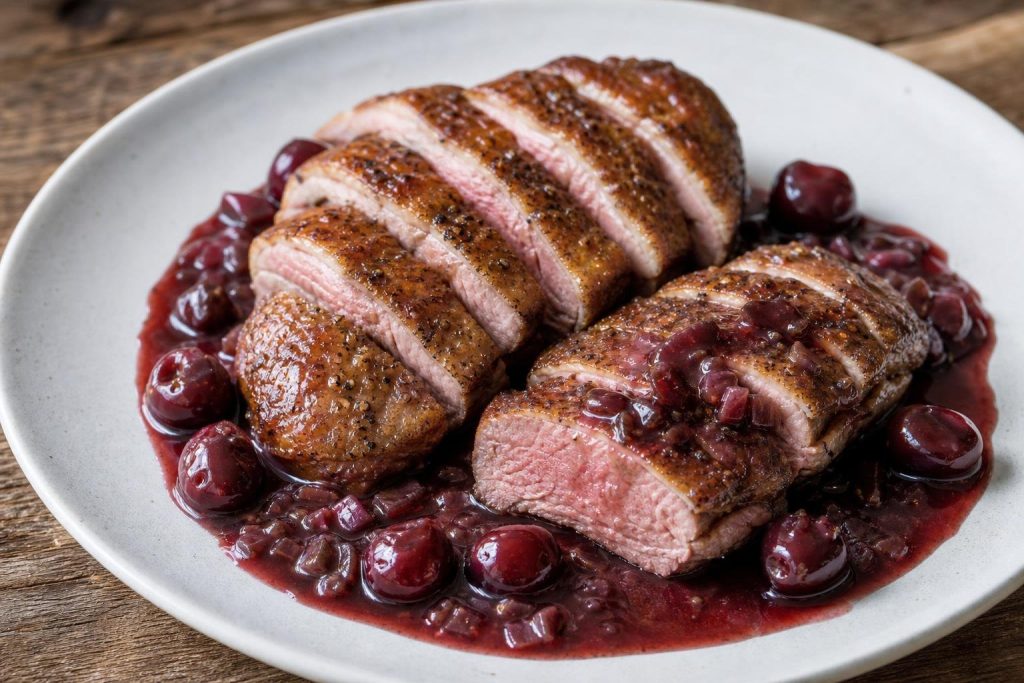
Seared Duck Breast with Cherry-Port Sauce
Ingredients
- 4 pieces
room temperature
How to measure
- 1 teaspoon · ≈ 5 ml
How to measure
- ½ teaspoon · ≈ 2.5 ml
freshly ground
How to measure
- 2 tablespoons · ≈ 30 ml
How to measure
- 2 tablespoons · ≈ 30 ml
finely chopped
How to measure
- 1 teaspoon · ≈ 5 ml
How to measure
- 1 cup · ≈ 150 g
fresh or frozen, pitted
How to measure
- ½ cup · ≈ 120 ml
How to measure
- ¼ cup · ≈ 60 ml
low sodium
How to measure
- 2 tablespoons · ≈ 30 g
How to measure
Ingredient quantities adjust from the original 4 servings. Instructions and cooking times stay unchanged.
Measurement guide
tbsp = tablespoon · tsp = teaspoon. Use measuring spoons, not table cutlery. Metric equivalents are estimates. ¾ = three quarters; ½ = one half; ¼ = one quarter.
Directions
Prepare and season the duck breasts
Patting the duck breasts dry with paper towels is essential for achieving that coveted crispy skin, as excess moisture can cause steaming rather than searing. Scoring the skin in a diamond pattern allows the fat beneath to render evenly during cooking and creates an appealing texture and appearance. Be careful not to cut into the meat to prevent juices from escaping. Seasoning generously with salt and freshly ground black pepper enhances the duck's inherent flavor. Resting the duck at room temperature for about 10 minutes takes the chill off, which helps the breast cook more evenly when it hits the pan.
Sear the duck breasts
Heating the skillet over medium heat before adding olive oil ensures the pan is ready to sear the duck properly. Placing the duck breasts skin-side down first directs heat to the skin, rendering fat and creating a crisp, golden exterior without burning. Resist the urge to move the breasts during the initial 6-8 minutes; this undisturbed contact promotes even browning. After flipping, cooking for another 5-6 minutes brings the duck to medium-rare, which preserves moistness and tenderness. Using a meat thermometer to check for an internal temperature of 135°F (57°C) is the safest method to achieve perfect doneness. Letting the cooked duck rest for 5 minutes allows the juices to redistribute, preventing moisture loss when slicing.
Make the cherry-port sauce
Using the same skillet takes advantage of the flavorful fond left behind from searing the duck. Lowering the heat to medium-low prevents burning while sautéing shallots and thyme, which softens their flavors and infuses the sauce base with aromatic notes. Adding cherries, port wine, and low-sodium chicken broth introduces layers of fruitiness, sweetness, and umami. Simmering gently until the liquid reduces by half concentrates these flavors and thickens the sauce to a luscious consistency. Whisking in unsalted butter at the end enriches the sauce, giving it a smooth, glossy finish that complements the richness of the duck perfectly.
Serve
Slicing the rested duck breasts thinly across the grain ensures tenderness and tenderness in every bite. Arranging the slices attractively on plates invites diners to appreciate the dish visually as well as gastronomically. Generously spooning the warm cherry-port sauce over the duck breasts highlights the combination of savory, sweet, and tangy flavors. Serving immediately keeps the skin crisp and the sauce at an ideal temperature. Side dishes such as roasted vegetables or creamy mashed potatoes pair well and complete the meal, providing textural balance and additional flavor contrasts.
Seared duck breast is a delicious alternative to more common poultry dishes, offering rich flavor and a satisfying texture. This dish pairs perfectly with a cherry-port sauce that highlights the duck's natural richness with a fruity and slightly sweet finish, creating a balance of savory and sweet notes.
This recipe is designed for home cooks of all skill levels who want to indulge in a sophisticated meal without complicated techniques. The pan-searing method creates crispy skin and tender meat, while the cherry-port reduction adds depth and elegance through its fruity acidity and velvety texture.
Preparing this Seared Duck Breast with Cherry-Port Sauce requires only a few ingredients and straightforward steps, making it accessible for a quick weeknight dinner or a special occasion. The focus is on classic flavors and easy techniques to deliver impressive results that showcase the duck's natural qualities.
How to Make Seared Duck Breast
- Prepare and season the duck breasts: Patting the duck breasts dry with paper towels is essential for achieving that coveted crispy skin, as excess moisture can cause steaming rather than searing. Scoring the skin in a diamond pattern allows the fat beneath to render evenly during cooking and creates an appealing texture and appearance.
- Sear the duck breasts: Heating the skillet over medium heat before adding olive oil ensures the pan is ready to sear the duck properly. Placing the duck breasts skin-side down first directs heat to the skin, rendering fat and creating a crisp, golden exterior without burning.
- Make the cherry-port sauce: Using the same skillet takes advantage of the flavorful fond left behind from searing the duck. Lowering the heat to medium-low prevents burning while sautéing shallots and thyme, which softens their flavors and infuses the sauce base with aromatic notes.
- Serve: Slicing the rested duck breasts thinly across the grain ensures tenderness and tenderness in every bite. Arranging the slices attractively on plates invites diners to appreciate the dish visually as well as gastronomically.
Equipment
- Skillet or frying pan
- Meat thermometer
- Small saucepan
- Tongs
- Knife
- Cutting board
Metric measurements
For the original 4 servings. This reference table stays fixed when you change the portions above.
| Ingredient | US amount | Metric equivalent |
|---|---|---|
| duck breasts, skin on, trimmedroom temperature | 4 pieces | 4 pieces |
| salt | 1 teaspoon | 5 ml |
| black pepperfreshly ground | ½ teaspoon | 2.5 ml |
| olive oil | 2 tablespoons | 30 ml |
| shallots, finely choppedfinely chopped | 2 tablespoons | 30 ml |
| dried thyme | 1 teaspoon | 5 ml |
| pitted cherries, fresh or frozenfresh or frozen, pitted | 1 cup | 150 g |
| port wine | ½ cup | 120 ml |
| chicken brothlow sodium | ¼ cup | 60 ml |
| unsalted butter | 2 tablespoons | 30 g |
Cooking tips
- Score the duck breast skin carefully to avoid cutting into the meat, which helps render fat and crisp the skin evenly.
- Use a meat thermometer to check doneness; duck is best served medium-rare to medium (135-140°F).
- If fresh cherries are out of season, frozen cherries work well and can be added directly to the sauce without thawing.
- Allow the duck to rest after cooking to redistribute juices and keep the meat tender.
Substitutions
- Replace port wine with red wine or unsweetened grape juice for a non-alcoholic version; note the flavor will be less rich.
- If fresh or frozen cherries are unavailable, dried cherries soaked in warm water for 10 minutes can be used, though the sauce will be less vibrant.
Storage and reheating
Store any leftover cooked duck breasts in an airtight container in the refrigerator for up to 3 days to maintain freshness. When reheating, do so gently either in a skillet over low heat or in a low oven set around 275°F (135°C) to avoid overcooking and drying out the meat.
The cherry-port sauce can be stored separately in the refrigerator and warmed on the stove with a splash of water or chicken broth to loosen it if it thickens during storage. Proper reheating preserves both the texture of the duck and the complex flavors of the sauce.
Allergen notes
Potential allergens include milk. Check all labels and substitutions; this is not an exhaustive allergen assessment.