
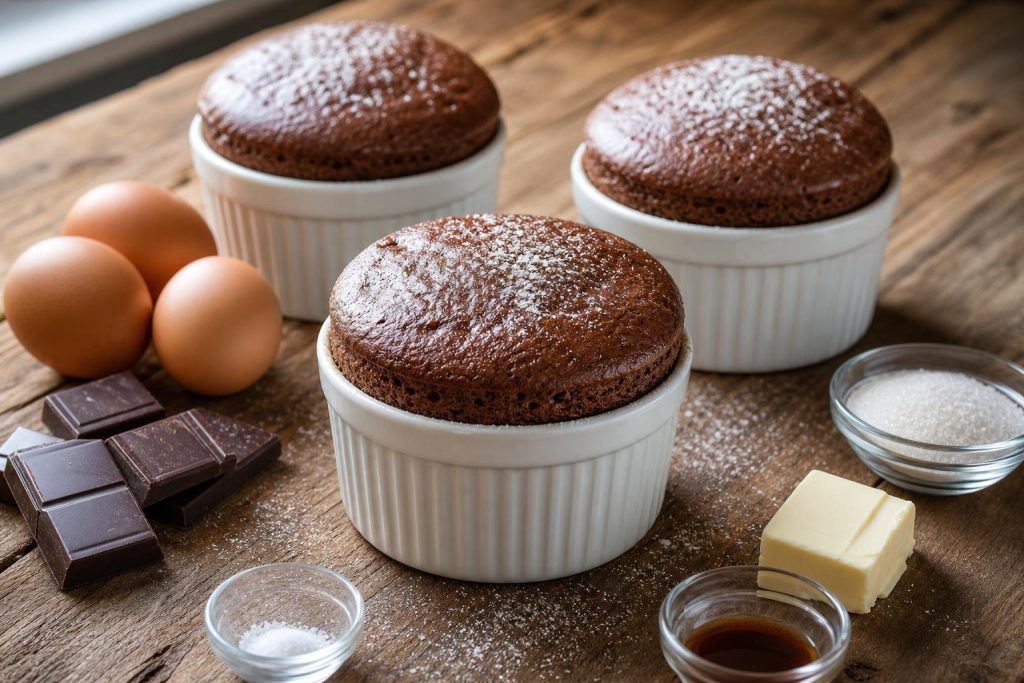
French Chocolate Soufflé with Dark Chocolate
Ingredients
- 4 ounces · ≈ 115 g
chopped
How to measure
- 2 tablespoons · ≈ 28 g
plus extra for greasing ramekins
How to measure
- 6 tablespoons · ≈ 75 g
divided
How to measure
- 4
separated
How to measure
- 1 teaspoon · ≈ 5 ml
How to measure
- 1 pinch
How to measure
Ingredient quantities adjust from the original 4 servings. Instructions and cooking times stay unchanged.
Measurement guide
tbsp = tablespoon · tsp = teaspoon. Use measuring spoons, not table cutlery. Metric equivalents are estimates. ¾ = three quarters; ½ = one half; ¼ = one quarter.
Directions
Prepare Ramekins and Melt Chocolate
Preheat your oven to 375°F (190°C) to ensure even heat distribution for optimal souffle rise. Thoroughly butter four ramekins, making sure to coat all surfaces evenly to prevent sticking. Then sprinkle a small amount of granulated sugar inside each ramekin, tilting and tapping out the excess; this sugar layer not only helps with release but adds a subtle crunchy edge to the souffle exterior. Melt the chopped bittersweet dark chocolate together with 2 tablespoons of unsalted butter in a heatproof bowl placed over simmering water, stirring gently until silky and smooth. Alternatively, use short bursts in a microwave on medium power, stirring between bursts to avoid overheating. Allow the chocolate mixture to cool slightly but remain fluid before mixing with egg yolks to avoid cooking them prematurely.
Beat Egg Yolks and Add Vanilla
In a separate mixing bowl, whisk the egg yolks with 3 tablespoons of granulated sugar and 1 teaspoon of vanilla extract. Beat until the mixture becomes pale yellow and slightly thickened, indicating the sugar has started to dissolve and incorporates air for lightness. Gradually fold the cooled melted chocolate and butter mixture into the egg yolks, stirring gently and steadily until fully combined into a smooth, luscious batter. This step ensures the chocolate is evenly distributed and the batter has a glossy finish crucial for an elegant souffle base.
Whip Egg Whites with Salt and Sugar
Using a clean, dry bowl, beat the egg whites with a pinch of salt until they form soft peaks, meaning when you lift the beaters, peaks gently bend over. Gradually add the remaining 3 tablespoons of granulated sugar in small additions while continuing to beat. Continue whipping until the egg whites reach stiff, glossy peaks—this indicates the meringue is perfectly aerated and stable. Properly whipped egg whites are essential to provide the souffle its characteristic rise and light texture.
Fold Meringue into Chocolate Mixture
Fold about one-third of the prepared meringue into the chocolate mixture using a large spatula, gently cutting through the center and folding over the edges to lighten the batter. This initial folding helps loosen the chocolate mixture, making further incorporation smoother. Then carefully fold in the remaining meringue in two additions using the same gentle, deliberate folding technique to preserve as much air as possible. The result should be a smooth, airy batter without streaks of white meringue or dark chocolate.
Fill Ramekins and Bake
Evenly divide the souffle batter among the prepared ramekins, filling each almost to the top but leaving a small margin to allow the souffle to rise without spilling over. Place the ramekins on a baking sheet to make handling easier and to protect the oven floor from any spills. Bake in the preheated oven for 12 to 15 minutes, monitoring for a dramatic rise and a set surface. The souffles should be puffed and have a slight wobble in the center, indicating a soft interior while fully cooked on the outside.
Serve Immediately
Remove the ramekins from the oven promptly and transfer them to a cooling rack. Serve immediately to capture the souffle at its peak height and delicate texture. The risen structure will begin to deflate within minutes after baking, so prompt serving ensures the best sensory experience with a contrast of warm, airy interior and slightly crisped top.
The French chocolate souffle is a timeless dessert that showcases the perfect balance between airy texture and rich chocolate flavor. Using dark chocolate lends a deep, satisfying taste that pairs beautifully with the souffle's delicate rise and soft interior, making this particular preparation a standout within classic French patisserie.
Mastering this baked souffle is straightforward and rewarding. This recipe guides you through each step to achieve a light, fluffy souffle with a dramatic rise in the oven, making it an impressive yet accessible French dessert for home cooks of all levels who appreciate both technique and flavor.
How to Make French Chocolate Souffle
- Prepare Ramekins and Melt Chocolate: Preheat your oven to 375°F (190°C) to ensure even heat distribution for optimal souffle rise. Thoroughly butter four ramekins, making sure to coat all surfaces evenly to prevent sticking.
- Beat Egg Yolks and Add Vanilla: In a separate mixing bowl, whisk the egg yolks with 3 tablespoons of granulated sugar and 1 teaspoon of vanilla extract. Beat until the mixture becomes pale yellow and slightly thickened, indicating the sugar has started to dissolve and incorporates air for lightness.
- Whip Egg Whites with Salt and Sugar: Using a clean, dry bowl, beat the egg whites with a pinch of salt until they form soft peaks, meaning when you lift the beaters, peaks gently bend over. Gradually add the remaining 3 tablespoons of granulated sugar in small additions while continuing to beat.
- Fold Meringue into Chocolate Mixture: Fold about one-third of the prepared meringue into the chocolate mixture using a large spatula, gently cutting through the center and folding over the edges to lighten the batter. This initial folding helps loosen the chocolate mixture, making further incorporation smoother.
- Fill Ramekins and Bake: Evenly divide the souffle batter among the prepared ramekins, filling each almost to the top but leaving a small margin to allow the souffle to rise without spilling over. Place the ramekins on a baking sheet to make handling easier and to protect the oven floor from any spills.
- Serve Immediately: Remove the ramekins from the oven promptly and transfer them to a cooling rack. Serve immediately to capture the souffle at its peak height and delicate texture.
Equipment
- Oven
- Ramekins or souffle dishes (4)
- Mixing bowls
- Whisk
- Saucepan
- Rubber spatula
- Electric mixer or hand mixer (optional)
- Cooling rack
Metric measurements
For the original 4 servings. This reference table stays fixed when you change the portions above.
| Ingredient | US amount | Metric equivalent |
|---|---|---|
| bittersweet dark chocolatechopped | 4 ounces | 115 g |
| unsalted butterplus extra for greasing ramekins | 2 tablespoons | 28 g |
| granulated sugardivided | 6 tablespoons | 75 g |
| large eggsseparated | 4 | 4 |
| vanilla extract | 1 teaspoon | 5 ml |
| pinch of salt | 1 pinch | 1 pinch |
Cooking tips
- Use room temperature eggs for better volume when whipping the egg whites.
- Be gentle when folding the meringue into the chocolate mixture to preserve airiness and ensure a light souffle.
- Butter and sugar your ramekins thoroughly to help the souffle climb the sides and rise evenly.
- Serve the souffle immediately out of the oven to enjoy its characteristic airy texture before it begins to collapse.
Substitutions
- You can substitute bittersweet dark chocolate with semi-sweet chocolate; expect a slightly sweeter and less intense flavor.
- If you don't have granulated sugar, superfine sugar works well to stabilize the meringue, but powdered sugar is not recommended as it may alter the texture.
Storage and reheating
French chocolate souffles are best enjoyed fresh and hot from the oven to appreciate their delicate rise and airy texture. If you happen to have leftovers, store them loosely covered in the refrigerator and consume within one day to maintain quality. Reheating is generally not recommended because the souffle’s tender, risen structure will collapse, resulting in a dense, less appealing texture.
For best results, plan to serve immediately after baking.
Allergen notes
Potential allergens include eggs, dairy. Check all labels and substitutions; this is not an exhaustive allergen assessment.