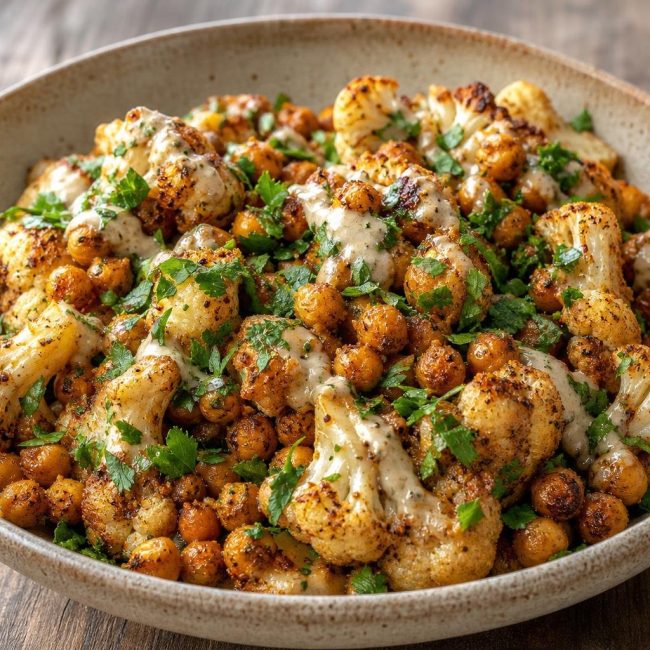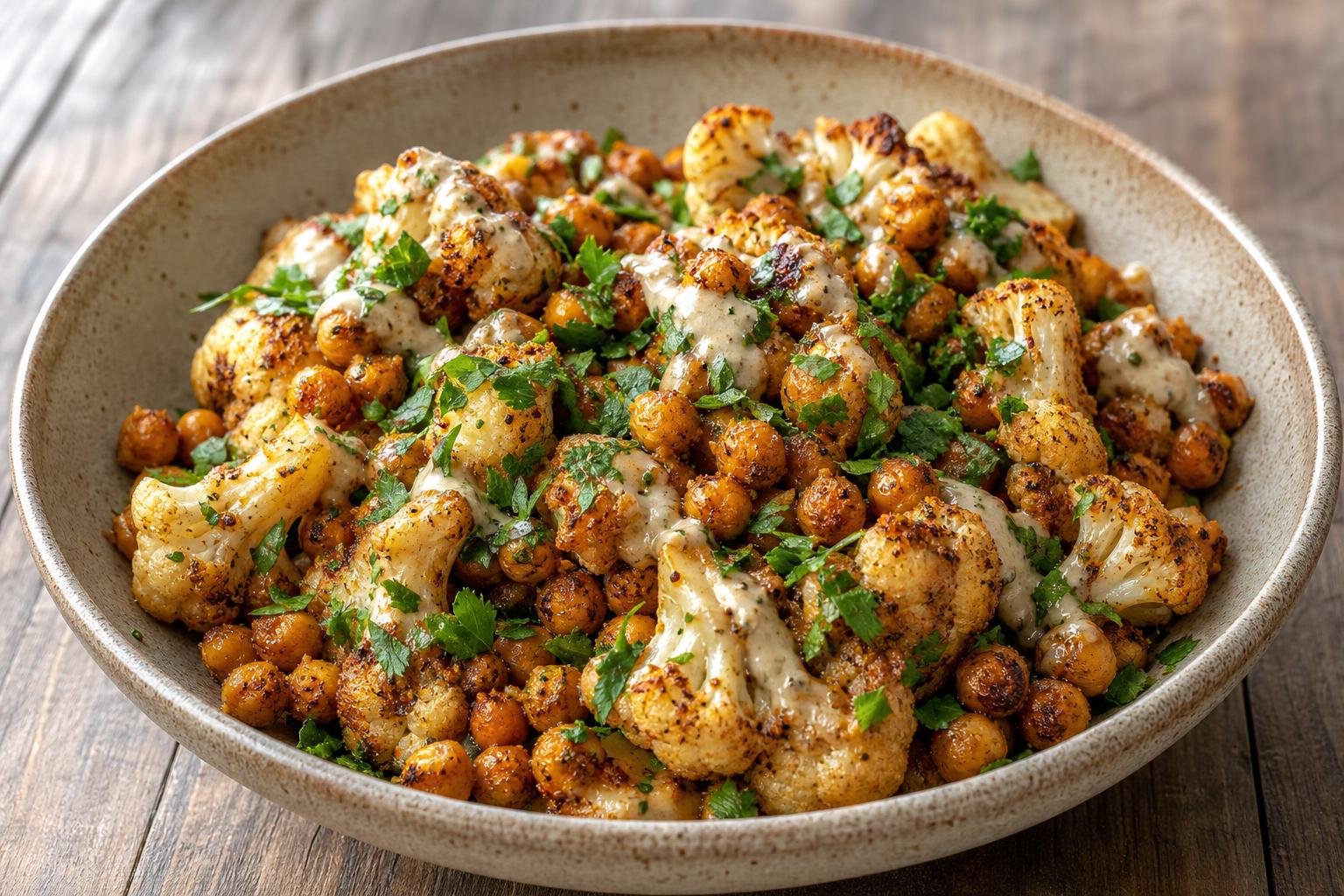
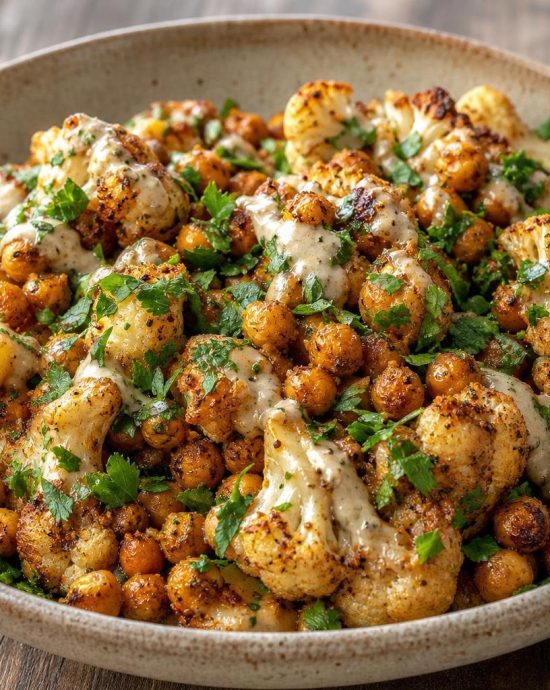

- Prepare and roast cauliflower and chickpeas
Begin by preheating your oven to 425°F (220°C) to ensure it reaches the optimal temperature for roasting. In a large mixing bowl, combine the bite-sized cauliflower florets and rinsed canned chickpeas. Drizzle 2 tablespoons of extra virgin olive oil over them, then sprinkle with ground cumin, smoked paprika, salt, and freshly ground black pepper to season evenly. Toss everything thoroughly so that each piece is well coated with oil and spices, which will enhance caramelization and flavor. Spread the mixture out evenly on a baking sheet in a single layer; this prevents steaming and helps develop those desirable golden edges. Roast for 25 to 30 minutes, stirring halfway through to promote even cooking. The cauliflower should turn tender and golden brown, and the chickpeas will develop crisp, flavorful edges, adding crunch to the salad.
- Make the tahini dressing
While the vegetables roast, prepare the tahini dressing to allow the flavors to meld. In a medium bowl, whisk together tahini paste, freshly squeezed lemon juice, warm water, minced garlic, 1 tablespoon of olive oil, and a pinch of salt until you achieve a smooth, creamy consistency. The warm water helps loosen the thick tahini to create a pourable dressing that will coat the salad ingredients beautifully. Taste the dressing and adjust the thickness if necessary by adding a bit more warm water. The garlic provides a pungent kick that balances the richness of tahini and the brightness of lemon. Setting this aside allows the flavors to develop fully as the roasted cauliflower and chickpeas finish cooking.
- Combine and serve
After roasting, allow the cauliflower and chickpeas to cool slightly to prevent wilting the fresh cilantro when mixed. Transfer them to a large serving bowl and drizzle the tahini dressing over the warm vegetables. Toss gently to ensure every piece is evenly coated without breaking the florets. The warmth of the roasted cauliflower and chickpeas will help the dressing absorb into the salad, creating a harmonious blend of textures and flavors. Finally, sprinkle the chopped fresh cilantro over the top for a burst of herbal freshness and color contrast. Serve this salad warm or at room temperature to enjoy the full depth of flavors; it pairs wonderfully with other dishes or can be enjoyed on its own as a light yet hearty meal.
Measurement guide
tbsp = tablespoon · tsp = teaspoon. Use measuring spoons, not table cutlery. Metric equivalents are estimates. ¾ = three quarters; ½ = one half; ¼ = one quarter.
Roasted cauliflower is a versatile ingredient that brings a rich, smoky flavor and hearty texture to salads, making it a standout component in many dishes. When combined with protein-rich chickpeas, it transforms a simple vegetable into a satisfying, nutrient-packed meal option.
This roasted cauliflower and chickpea salad is brightened with a creamy tahini dressing that adds depth through its nutty, slightly tangy profile. The dressing’s balanced acidity from fresh lemon juice and the aromatic notes of garlic and cilantro perfectly complement the warm, spiced vegetables.
Ideal for a quick meal or an elegant side dish, this recipe captures Middle Eastern-inspired flavors with minimal effort. It offers an inviting way to enjoy roasted cauliflower in a colorful, wholesome salad that's both delicious and simple to prepare.
How to Make Roasted Cauliflower
- Prepare and roast cauliflower and chickpeas: Begin by preheating your oven to 425°F (220°C) to ensure it reaches the optimal temperature for roasting. In a large mixing bowl, combine the bite-sized cauliflower florets and rinsed canned chickpeas.
- Make the tahini dressing: While the vegetables roast, prepare the tahini dressing to allow the flavors to meld. In a medium bowl, whisk together tahini paste, freshly squeezed lemon juice, warm water, minced garlic, 1 tablespoon of olive oil, and a pinch of salt until you achieve a smooth, creamy consistency.
- Combine and serve: After roasting, allow the cauliflower and chickpeas to cool slightly to prevent wilting the fresh cilantro when mixed. Transfer them to a large serving bowl and drizzle the tahini dressing over the warm vegetables.
Equipment
- baking sheet
- mixing bowl
- whisk
- knife
- cutting board
- measuring spoons
- spoon
Metric measurements
For the original 4 servings. These measurements stay fixed when portions change.
- cauliflower florets: 1 head; cut into bite-sized florets
- canned chickpeas: 1 425-gram can; drained and rinsed
- extra virgin olive oil: 45 ml
- ground cumin: 5 ml
- smoked paprika: 5 ml
- salt: 5 ml
- black pepper: 2.5 ml; freshly ground
- tahini: 60 ml
- fresh lemon juice: 45 ml; about 1 lemon
- warm water: 45 ml
- garlic: 1 clove; minced
- fresh cilantro: 15 grams; chopped
Cooking tips
- Make sure to spread the cauliflower and chickpeas in a single layer on the baking sheet to ensure even roasting and crispy edges.
- If you prefer a spicier salad, add a pinch of cayenne pepper to the seasoning mix before roasting.
- Use fresh lemon juice rather than bottled for the brightest flavor in the dressing.
- This salad tastes excellent when served with warm pita bread or over a bed of leafy greens to add crunch and color.
Substitutions
- You can swap the chickpeas for roasted white beans or cannellini beans for a different texture and flavor but keep the roasting step for best results.
- If you don’t have tahini, try using creamy sunflower seed butter or a Greek yogurt dressing instead, but note the flavor and texture will change.
Storage and reheating
Store any leftover salad in an airtight container in the refrigerator and consume within 3 days for the best taste and texture. To maintain the freshness and prevent the salad from becoming soggy, it’s recommended to keep the tahini dressing separate and add it just before serving. If you prefer to eat the salad warm, gently reheat it in a microwave until just warm, avoiding overheating which can affect texture.
Alternatively, the salad is enjoyable cold, making it a convenient and refreshing option for lunch or meal prep.
Allergen notes
Potential allergens include sesame, garlic. Check all labels and substitutions; this is not an exhaustive allergen assessment.