
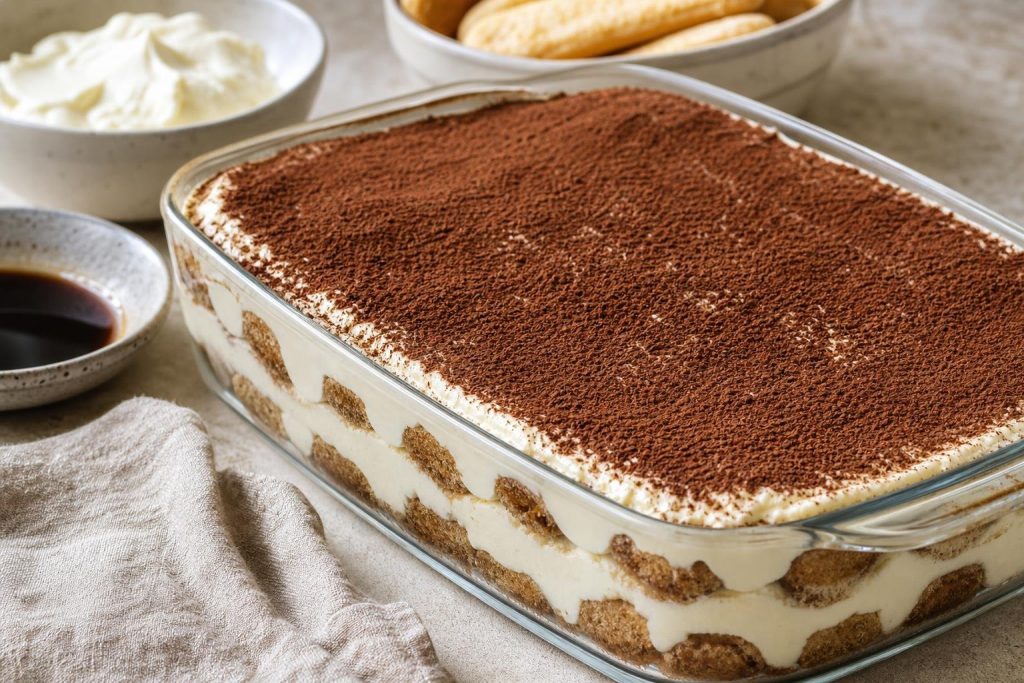
Italian Tiramisu with Mascarpone and Espresso Soak
Ingredients
- 4
room temperature
How to measure
- ½ cup
How to measure
- 8 ounces
softened to room temperature
How to measure
- 1 cup · ≈ 240 ml
cold
How to measure
- 1½ cups · ≈ 360 ml
freshly brewed and cooled
How to measure
- 24
How to measure
- 2 tablespoons
for dusting
How to measure
Ingredient quantities adjust from the original 4 servings. Instructions and cooking times stay unchanged.
Measurement guide
tbsp = tablespoon · tsp = teaspoon. Use measuring spoons, not table cutlery. Metric equivalents are estimates. ¾ = three quarters; ½ = one half; ¼ = one quarter.
Directions
Prepare the Mascarpone Cream
Begin by preparing the mascarpone cream, which forms the luscious heart of the italian tiramisu. Start by whisking the egg yolks and granulated sugar together in a mixing bowl. Whisk vigorously for about 3 to 4 minutes until the mixture becomes pale and slightly thickened, indicating that enough air has been incorporated to create a light texture. Next, using an electric mixer or whisk, beat the mascarpone cheese until it is smooth and free of lumps. Gently fold the mascarpone into the egg yolk mixture, combining carefully to maintain the airy consistency. In a separate chilled bowl, whip the cold heavy cream until stiff peaks form; this step is crucial for providing the creaminess and body to the tiramisu. Finally, carefully fold the whipped cream into the mascarpone and egg yolk base until fully combined and smooth, taking care not to deflate the mixture. This results in a rich yet light cream that will complement the coffee-soaked ladyfingers perfectly.
Soak the Ladyfingers in Espresso
Next, prepare the ladyfingers by soaking them in espresso to infuse the dessert with its signature coffee flavor. Pour the freshly brewed and cooled espresso into a shallow dish to allow easy dipping. Quickly dip each ladyfinger for just 1 to 2 seconds; this timing is important to absorb enough liquid without becoming overly soggy or falling apart. The ideal soaked ladyfinger should be moist but still retain its shape and slight firmness, providing a pleasant texture contrast to the creamy layers. Arrange the soaked ladyfingers in a neat single layer on the bottom of your serving dish, forming the first base layer of the tiramisu. This step ensures the espresso flavor permeates the dessert thoroughly.
Assemble the Tiramisu Layers
Now assemble the tiramisu by layering the components to achieve the classic texture and flavor balance. Spread half of the prepared mascarpone cream evenly over the espresso-soaked ladyfingers, smoothing the surface with a spatula to create a uniform layer. This creates a creamy contrast to the coffee-infused biscuits below. Add another layer of soaked ladyfingers on top of the mascarpone cream, repeating the dipping process if necessary to ensure they are evenly moistened. Then spread the remaining mascarpone cream over this second layer, again smoothing for an even finish. Pay attention to the edges and corners to avoid gaps. The layered assembly is essential for combining the textures and allowing flavors to meld during chilling.
Chill and Serve
Finally, cover the assembled tiramisu tightly with plastic wrap to prevent it from drying out or absorbing any refrigerator odors. Refrigerate the dessert for at least 4 hours, though overnight chilling is preferable. This resting time allows the mascarpone cream to firm up and the espresso flavor to fully infuse the ladyfingers, resulting in the silky texture that defines italian tiramisu. Just before serving, sift unsweetened cocoa powder evenly over the top layer to add a slightly bitter contrast and enhance the appearance with a classic finish. This step completes the dessert and makes it ready to enjoy.
Italian tiramisu is a beloved classic Italian dessert known for its rich and creamy texture combined with bold coffee flavors. This no-bake recipe uses espresso-soaked ladyfingers layered with a smooth mascarpone mixture to create a delicate yet indulgent experience ideal for any occasion. Its authentic preparation reveals the harmony between the slightly bitter espresso and the sweet, velvety mascarpone cream, making it an enduring favorite worldwide.
This Italian tiramisu recipe is straightforward and perfect for beginner to intermediate home cooks. It requires no oven time, relying instead on chilling to develop its signature texture, making it an easy dessert to prepare ahead of time while ensuring each bite delivers a perfect harmony of coffee and creamy sweetness. The layering technique highlights the distinct textures of the crisp yet soaked ladyfingers paired with the airy mascarpone mixture.
Mascarpone cheese and freshly brewed espresso provide the core flavors, while a dusting of cocoa powder adds a final touch. Whether serving for a family dinner or a special celebration, this classic Italian dessert will impress with its luscious layers and refined taste. Its simple elegance captures the essence of Italian culinary tradition, inviting you to savor each luscious bite.
How to Make Italian Tiramisu
- Prepare the Mascarpone Cream: Begin by preparing the mascarpone cream, which forms the luscious heart of the italian tiramisu. Start by whisking the egg yolks and granulated sugar together in a mixing bowl.
- Soak the Ladyfingers in Espresso: Next, prepare the ladyfingers by soaking them in espresso to infuse the dessert with its signature coffee flavor. Pour the freshly brewed and cooled espresso into a shallow dish to allow easy dipping.
- Assemble the Tiramisu Layers: Now assemble the tiramisu by layering the components to achieve the classic texture and flavor balance. Spread half of the prepared mascarpone cream evenly over the espresso-soaked ladyfingers, smoothing the surface with a spatula to create a uniform layer.
- Chill and Serve: Finally, cover the assembled tiramisu tightly with plastic wrap to prevent it from drying out or absorbing any refrigerator odors. Refrigerate the dessert for at least 4 hours, though overnight chilling is preferable.
Equipment
- mixing bowls
- electric mixer or whisk
- shallow dish for espresso soak
- 9×9 inch square dish or similar serving dish
- sifter or fine mesh sieve
- refrigerator
- spatula
Metric measurements
For the original 4 servings. This reference table stays fixed when you change the portions above.
| Ingredient | US amount | Metric equivalent |
|---|---|---|
| egg yolksroom temperature | 4 | 4 |
| granulated sugar | ½ cup | 100 grams |
| mascarpone cheesesoftened to room temperature | 8 ounces | 225 grams |
| heavy creamcold | 1 cup | 240 ml |
| espressofreshly brewed and cooled | 1½ cups | 360 ml |
| ladyfingers (savoiardi) | 24 | 24 |
| unsweetened cocoa powderfor dusting | 2 tablespoons | 15 grams |
Cooking tips
- Use freshly brewed espresso for the best coffee flavor, but strong brewed coffee can substitute if espresso is unavailable.
- Dip ladyfingers briefly into the espresso—too long and they will become soggy and lose texture.
- Be gentle when folding mascarpone and whipped cream to retain the creamy lightness of the mixture.
- Chill the tiramisu for several hours or overnight to develop the authentic texture and melded flavors typical of this dessert.
Substitutions
- Replace raw egg yolks with pasteurized liquid eggs or egg yolk powder for food safety, but texture may be slightly different.
- Use decaffeinated espresso or coffee to make a caffeine-free version, adjusting soaking liquid temperature accordingly; flavor will be milder.
Storage and reheating
Store leftover italian tiramisu covered securely in the refrigerator and consume within 2 days to maintain its freshness and optimal texture. Due to the use of eggs and dairy in the recipe, it is important to avoid leaving the dessert at room temperature for extended periods for food safety reasons.
When serving leftovers, allow the tiramisu to sit at room temperature for 10 to 15 minutes to soften slightly, which will help restore its characteristic creaminess. However, do not leave it unrefrigerated beyond 2 hours to ensure it remains safe and delicious.
Allergen notes
Potential allergens include Eggs, Dairy, Gluten. Check all labels and substitutions; this is not an exhaustive allergen assessment.